
Grounding pesticide use intensity and hazards with real-world data: Toward correcting global model interpolation in tropical agriculture
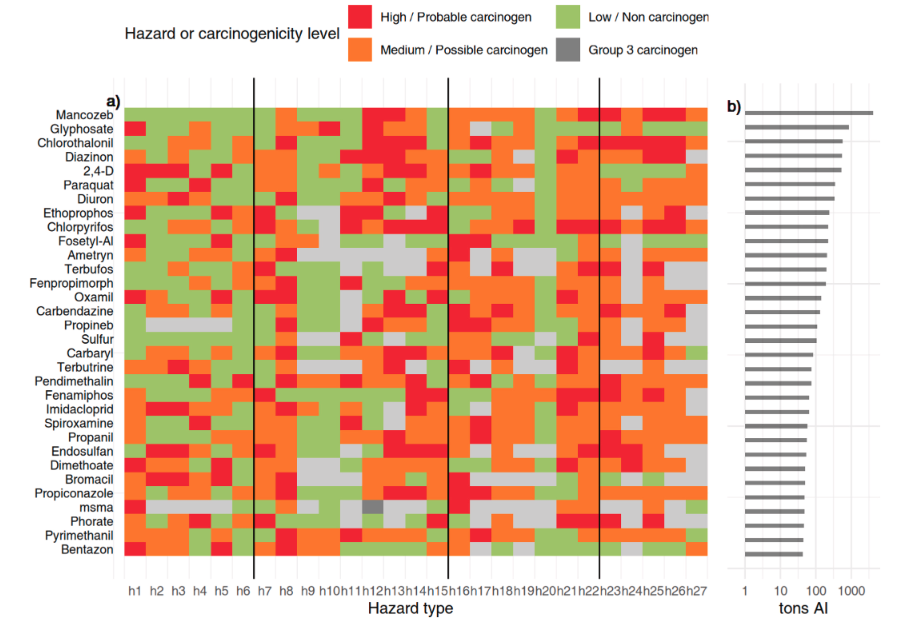
Global pesticide use is increasing, especially in low- and lower-middle-income countries, posing threats to non-target organisms, ecosystems, and people. However, data on pesticide use globally and within nations are often low quality, lacking fine-grained data, including specific active ingredients used, which constrains the accurate calculation of hazards and risk assessments associated with pesticide use practices. The geographic differentiation of these shortcomings suggests that the agricultural patterns in the global South, especially in the tropics, are generally misrepresented. Here, we use Costa Rica, which relies heavily on pesticides and has a formulation industry, as a case study to develop a nuanced country-level analysis of pesticide use and associated hazards. We bring together various sources of data on trade, formulation, and use practices to estimate pesticide use and calculate its associated hazards by combining our estimations with a dataset on pesticide hazards. This way, for the first time, we assessed trends in pesticide use and hazards over time and their associations with different crops using publicly available national data. The yearly average use intensity in cropland was 21.91 ± 0.42 kg/ha and we found temporal and spatial trends in pesticide use, with higher levels in the country’s Caribbean region, dominated by export crops (large-scale banana and pineapple monocrops). Our results contrast with national estimates and international datasets, such as the FAOSTAT dataset, and with global model outputs, which show lower estimates. Moreover, our hazard analyses contradict the narrative of hazard improvement through modern a.i.’s. We argue for the importance of data availability, as it enables transparency into trends over time and accountability for the state’s efforts to reduce pesticide risks.
Indigenous peoples and local community reports of climate change impacts on biodiversity
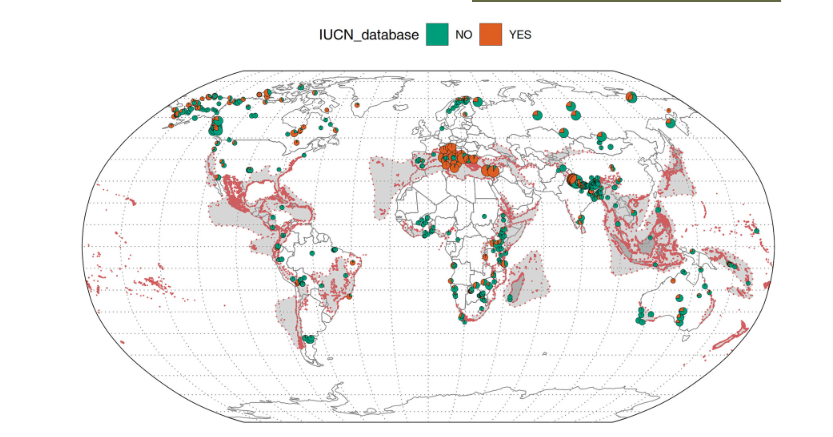
Climate change impacts on biodiversity have been primarily studied through ecological research methods, largely ignoring other knowledge systems. Indigenous and local knowledge systems include rich observations of changes in biodiversity that can inform climate change adaptation planning and environmental stewardship. We reviewed literature documenting local observations of climate change impacts on biodiversity reported by Indigenous peoples and local communities. We examined whether reported impacts varied across taxa, geographic regions, and people’s main livelihood activities and assessed whether local reports followed geographic and taxonomic patterns found in the natural sciences literature. We also compared taxa reportedly affected by climate change by Indigenous peoples and local communities and by the International Union for Conservation of Nature (IUCN) Red List. Our analyses included 2452 observations of climate change impacts on 1715 taxa from 203 documents describing 291 case studies. Changes in taxon abundance, phenotype, phenology, and distribution were widely reported, and most climate change impacts were reported for plants, fishes, and mammals. Reported impacts differed by geographic region and by livelihood, and most species reported as affected by climate change by Indigenous peoples and local communities were not considered threatened by climate change by the IUCN. Our results showed that Indigenous and local knowledge systems can contribute to a more complete understanding of climate change impacts on biodiversity.
Indigenous Peoples and local communities report a consistent decline in the body mass of birds across three continents
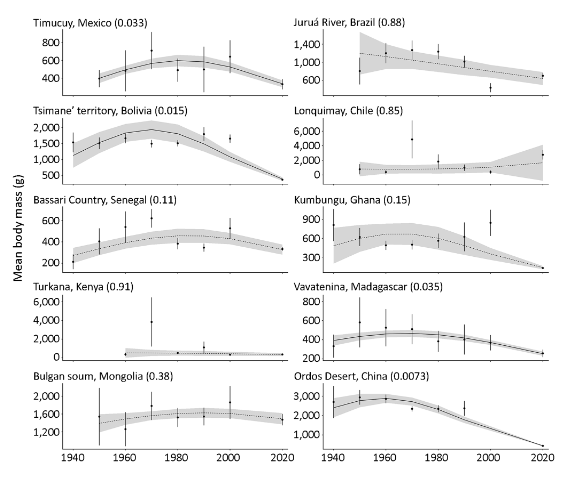
Increasing evidence shows that genuine collaboration between scientists and Indigenous Peoples and local communities can deepen global understanding of species’ ecological distribution ranges, baselines and trends. In this study, we explore trends in bird body mass as reflected in the collective biocultural memory of 10 place-based communities on three continents. To do so, we conducted a globally coordinated survey, asking 1,434 adult participants about the most common bird species around their territories both at present and during their childhood. The survey resulted in 6,914 unique bird reports, corresponding to 283 bird species and covering an 80-year period (1940–2020). By combining our ethno-ornithological dataset with scientific data on species’ body mass, we assessed whether the composition of locally abundant bird assemblages has shifted towards smaller-bodied species over time. Our results show a general shift in the bird species observed over the participants’ lifetimes, with recent species assemblages being composed of species with smaller body sizes than those in the past. Despite variation among sites, we find an overall statistically significant body mass reduction of 72% across all sites over 80 years. This work illustrates that the depth of the current avian extinction crisis, which has been well documented by scientists, is also widely acknowledged by Indigenous Peoples and local communities through their deep ecological knowledge and place-based observations. It highlights the substantial benefits of establishing meaningful collaborations across different knowledge systems to increase the evidence basis that underpins biodiversity policy and practice.
Indigenous Peoples and local communities report ongoing and widespread climate change impacts on local social-ecological systems

The effects of climate change depend on specific local circumstances, posing a challenge for worldwide research to comprehensively encompass the diverse impacts on various local social-ecological systems. Here we use a place-specific but cross-culturally comparable protocol to document climate change indicators and impacts as locally experienced and analyze their distribution. We collected first-hand data in 48 sites inhabited by Indigenous Peoples and local communities and covering all climate zones and nature-dependent liveli-hoods. We documented 1,661 site-agreed reports of change corresponding to 369 indicators.
Reports of change vary according to climate zone and livelihood activity. We provide compelling evidence that climate change impacts on Indigenous Peoples and local communities are ongoing, tangible, widespread, and affect multiple elements of their social-ecological systems. Beyond potentially informing contextualized adaptation plans, our results show that local reports could help identify economic and non-economic loss and damage related to climate change impacts suffered by Indigenous Peoples and local communities.
Analyzing the impacts of elevated-CO2 levels on the development of a subtropical zooplankton community during oligotrophic conditions and simulated upwelling
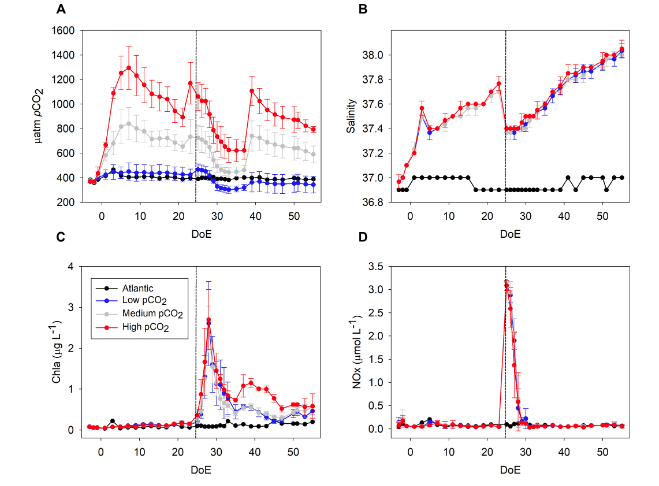
Ocean acidification (OA) is affecting marine ecosystems through changes in carbonate chemistry that may influence consumers of phytoplankton, often via trophic pathways. Using a mesocosm approach, we investigated OA effects on a subtropical zooplankton community during oligotrophic, bloom, and post-bloom phases under a range of different pCO2 levels (from ∼400 to ∼1480 μatm). Furthermore, we simulated an upwelling event by adding 650 m-depth nutrient-rich water to the mesocosms, which initiated a phytoplankton bloom. No effects of pCO2 on the zooplankton community were visible in the oligotrophic conditions before the bloom. The zooplankton community responded to phytoplankton bloom by increased abundances in all treatments, although the response was delayed under high-pCO2 conditions. Microzooplankton was dominated by small dinoflagellates and aloricate ciliates, which were more abundant under medium- to high-pCO2 conditions. The most abundant mesozooplankters were calanoid copepods, which did not respond to CO2 treatments during the oligotrophic phase of the experiment but were found in higher abundance under medium- and high-pCO2 conditions toward the end of the experiment, most likely as a response to increased phyto- and microzooplankton standing stocks. The second most abundant mesozooplankton taxon were appendicularians, which did not show a response to the different pCO2 treatments. Overall, CO2 effects on zooplankton seemed to be primarily transmitted through significant CO2 effects on phytoplankton and therefore indirect pathways. We conclude that elevated pCO2 can change trophic cascades with significant effects on zooplankton, what might ultimately affect higher trophic levels in the future.
Toxic algal bloom induced by ocean acidification disrupts the pelagic food web

Ocean acidification, the change in seawater carbonate chemistry due to the uptake of anthropogenic CO2, affects the physiology of marine organisms in multiple ways1. Diverse competitive and trophic interactions transform the metabolic responses to changes in community composition, seasonal succession and potentially geographical distribution of species. The health of ocean ecosystems depends on whether basic biotic functions are maintained, ecosystem engineers and keystone species are retained, and the spread of nuisance species is avoided2. Here, we show in a field experiment that the toxic microalga Vicicitus globosus has a selective advantage under ocean acidification, increasing its abundance in natural plankton communities at CO2 levels higher than 600 µatm and developing blooms above 800 µatm CO2. The mass development of V. globosus has had a dramatic impact on the plankton community, preventing the development of the micro- and mesozooplankton communities, thereby disrupting trophic transfer of primary produced organic matter. This has prolonged the residence of particulate matter in the water column and caused a strong decline in export flux. Considering its wide geographical distribution and confirmed role in fish kills3, the proliferation of V. globosus under the IPCC4 CO2 emission representative concentration pathway (RCP4.5 to RCP8.5) scenarios may pose an emergent threat to coastal communities, aquaculture and fisheries.
Plankton responses to ocean acidification: The role of nutrient limitation

In situ mesocosm experiments on the effect of ocean acidification (OA) are an important tool for investigating potential OA-induced changes in natural plankton communities. In this study we combined results from various in-situ mesocosm studies in two different ocean regions (Arctic and temperate waters) to reveal general patterns of plankton community shifts in response to OA and how these changes are modulated by inorganic nutrient availability. Overall, simulated OA caused an increase in phytoplankton standing stock, which was more pronounced in smaller-sized taxa. This effect on primary producers was channelled differently into heterotroph primary consumers depending on the inorganic nutrient availability. Under limiting conditions, bacteria and micro-heterotrophs benefited with inconsistent responses of larger heterotrophs. During nutrient replete periods, heterotrophs were in general negatively affected, although there was an increase of some mesozooplankton developmental stages (i.e. copepodites). We hypothesize that changes in phytoplankton size distribution and community composition could be responsible for these food web responses.
Simulated ocean acidification reveals winners and losers in coastal phytoplankton

The oceans absorb ~25% of the annual anthropogenic CO2 emissions. This causes a shift in the marine carbonate chemistry termed ocean acidification (OA). OA is expected to influence metabolic processes in phytoplankton species but it is unclear how the combination of individual physiological changes alters the structure of entire phytoplankton communities. To investigate this, we deployed ten pelagic mesocosms (volume ~50 m3) for 113 days at the west coast of Sweden and simulated OA (pCO2 = 760 μatm) in five of them while the other five served as controls (380 μatm). We found: (1) Bulk chlorophyll a concentration and 10 out of 16 investigated phytoplankton groups were significantly and mostly positively affected by elevated CO2 concentrations. However, CO2 effects on abundance or biomass were generally subtle and present only during certain succession stages. (2) Some of the CO2-affected phytoplankton groups seemed to respond directly to altered carbonate chemistry (e.g. diatoms) while others (e.g. Synechococcus) were more likely to be indirectly affected through CO2 sensitive competitors or grazers. (3) Picoeukaryotic phytoplankton (0.2–2 μm) showed the clearest and relatively strong positive CO2 responses during several succession stages. We attribute this not only to a CO2 fertilization of their photosynthetic apparatus but also to an increased nutrient competitiveness under acidified (i.e. low pH) conditions. The stimulating influence of high CO2/low pH on picoeukaryote abundance observed in this experiment is strikingly consistent with results from previous studies, suggesting that picoeukaryotes are among the winners in a future ocean.
Ocean acidification effects on mesozooplankton community development: Results from a long-term mesocosm experiment
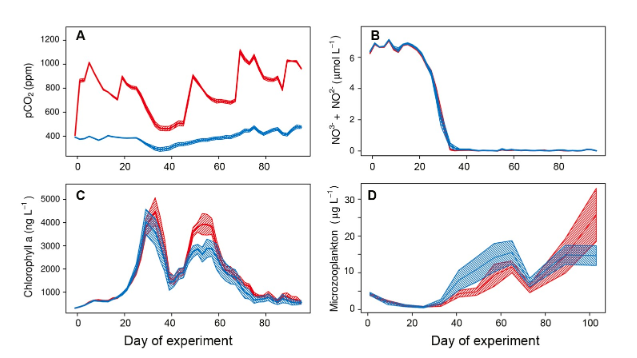
Ocean acidification may affect zooplankton directly by decreasing in pH, as well as indirectly via trophic pathways, where changes in carbon availability or pH effects on primary producers may cascade up the food web thereby altering ecosystem functioning and community composition. Here, we present results from a mesocosm experiment carried out during 113 days in the Gullmar Fjord, Skagerrak coast of Sweden, studying plankton responses to predicted end-of-century pCO2 levels. We did not observe any pCO2 effect on the diversity of the mesozooplankton community, but a positive pCO2 effect on the total mesozooplankton abundance. Furthermore, we observed species-specific sensitivities to pCO2 in the two major groups in this experiment, copepods and hydromedusae. Also stage-specific pCO2 sensitivities were detected in copepods, with copepodites being the most responsive stage. Focusing on the most abundant species, Pseudocalanus acuspes, we observed that copepodites were significantly more abundant in the high-pCO2 treatment during most of the experiment, probably fuelled by phytoplankton community responses to high-pCO2 conditions. Physiological and reproductive output was analysed on P. acuspes females through two additional laboratory experiments, showing no pCO2 effect on females’ condition nor on egg hatching. Overall, our results suggest that the Gullmar Fjord mesozooplankton community structure is not expected to change much under realistic end-of-century OA scenarios as used here. However, the positive pCO2 effect detected on mesozooplankton abundance could potentially affect biomass transfer to higher trophic levels in the future.